Showing posts with label autumn. Show all posts

Saturday, November 4, 2017

Unusually warm again: on the peculiarly temporary sensation of enjoying climate change


I wrote this on October 28, but it is still true in November, this humid unseasonable weather that clings to the days and makes our nights sweaty and confusing.

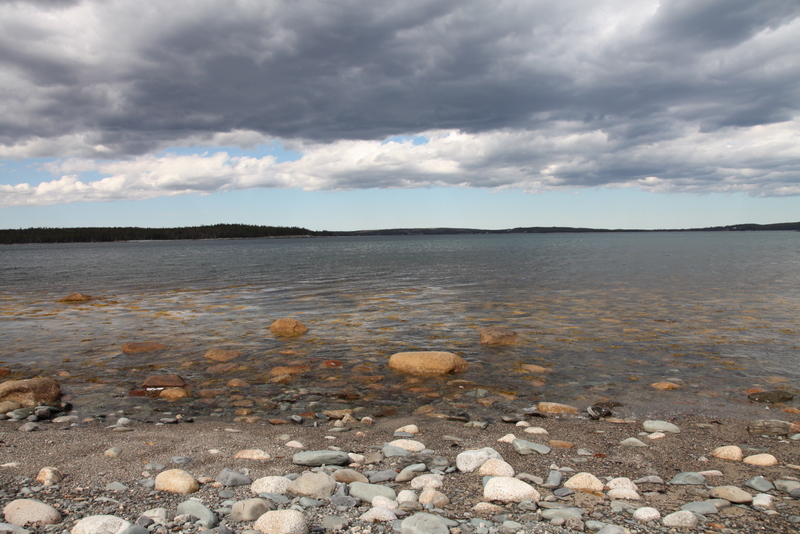
A band of clouds gathers over the outermost islands, but here, closer inland, the sky is blue and the sun warm, the air sweet and gentle, hot even, if you're in the lee of the breeze. Dragonflies fall into the sea; you notice them because they spin in the water in their death throes, their wings still revolving. The great blue herons still fish from the pond and at the backs of the coves, and the loons still gather and linger, floating silently some distance offshore.

It's still so warm that some of the lupines have burst into bloom again; likewise the thistles, and at night, here and there, we can hear a few frogs creaking and singing from the mud, as if we might skip winter and it were spring all over again. Mosquitoes still gather and slow moving flies bumble into our hair as we walk at the forest edge. Meanwhile, the apples ripen and drop from the trees, the cranberries redden and sweeten,  and the ferns have turned brown and begun to crumble.  Wild rosebushes gleam yellow and scarlet; rose hips jewel along the path by the shore. The tamaracks (or larches, as they are called in the US,) yellow and begin to drop their needles. These are all sure signs of autumn; nevertheless, no one can be sure that it has arrived.

We walk and stretch and snooze in the afternoon sun, eat carrot salad for lunch, sip green tea. Golden light halos the yellowing leaves still clinging to the trees, and porcupines mumble in the underbrush.  The dog flushes pheasants and young grouse; deer droppings pebble the yard. The grass is still green. We sit on the porch and read, stare out over the water, and puzzle over when the cold will come. A spate of warmest, record-breaking days unfolds week over week. Every denies it, but we all love it. I think Canadians like climate change, says Elisabeth, who at nearly 83 is our household elder.

And so do we, even as the dwindling numbers of returning ducks and strange and sudden appearance of exotic fish in the water and razor clams along the beach alarm us. We all catch what feel like summer colds, but enjoy walking barefoot through the house and wearing t-shirts and shorts at the end of October. Where will it all end?

We don't want it to end, but this ongoing spate of warm weather makes us nervous.  It is as if we are holding our collective breath: the world has gone unpredictable, and we do not know what will come next. 

Meanwhile, the usual rapaciousness of superextractive industries continues and everything we touch turns to waste.  Every day brings idiot pronouncements from Washington, along with increasing rollbacks of environmental protections. The poor are ever poorer, the rich richer.  Insects are dying in unprecedented numbers; new wars break out nearly every day, and the number of global refugees tops 65 million. Nothing we have thoughts immutable is going to stay the same and we here, we privileged denizens of the global north, are largely to blame: this is the truth from which we frantically turn, as we thumb through our facebook feeds, liking, liking, loving, weeping, again and again.  (Look, look. Look where your hands are. Now.)


Friday, October 20, 2017

Poem trying to get in out of the rain


Autumn rattles at the windows of the night, rips
leaves from looping trees, punches
gustily against the wall.
I waken to creaking roofbeams, peer
sightless into blacklit night. Nothing
to see, but everything that is is sounding:
such a rush and crash of waves on rocks;
the clothesline sings a one-note samba,
the chimney turns to didgeridoo.
Only the dog sleeps, silent, beside me.
If I open the door to let the poem in,
it can sleep all night on the bench by the fire and
I'll return to bed then to wake you, slipping
frigid feet behind your knees.


Photos are of Usnea, or "Old man's beard" lichens in British Columbia and Nova Scotia.

Thursday, November 28, 2013

Tomorrow there will be ice


After an autumn of flat seas, the storm arrives at night. 
Rain stutters against the windows, billows in blowsy curtains 
past the light at the dock. At first the wind sings, a long slow whistle from
afar; it fingers through the cracks in the sash and
moans at the door. A light wind. By midnight 
it's roaring up like a train, slamming not again!
into the south wall. The house beams crack and 
whinge; we put out towels to sop up the water streaming
in: oh please move the pears; it does them no good
to be so damp.


Who sleeps in the midst of so much noise, and yet we do,
waking to ceaseless seas big as houses, water
roiling and tossing, beaches cluttered with 
spindrift and seaspray, the path puddled and filled
by twisted strands of seaweed and splintered 
lobster traps. Scrappy ancient spruces crouch 
close to the earth, turn 
away from the water: stones 
gather at their roots.
The cold hunkers in. We light the furnace;
tomorrow there will be ice.


Tuesday, November 19, 2013

Fall into fall--a month of days


Sunday, Quoddy
It is another warm, sunny brilliant day. Clouds rush westward overhead, a northerly wind rifles the blue water of the bay, and the drying grasses on the nearby hills glow golden in the sunlight. The air is clear, each colour sharp; every needle of the pines is distinct against the sky.


Wednesday, Halifax
Leaves and flowers gather in the bottom of my teacup; outside, the rain falls, scattering yellow leaves on the street.


Thursday, Halifax to Quoddy
With the rain comes a sudden surge of warmth and then fog, clouds of the thick white stuff blanket the highway as we head east.  The trees along the road glow in the dim light: red, orange, yellow, deep piney green. The ribbon of asphalt disappears into the mist. I take pleasure in the colours in even this narrow horizon, the succession of spaces--houses darkened in the rain, the glimmer of a lake, a strip of tidewater meandering through the marsh grass, a sudden flare of yellow and orange as we pass a small stand of maples.


Friday, Quoddy
The sky a bruised blue above a silvergrey sea, the air warm and damp. It could go on like this all day, or any minute now, pour rain.


Saturday, Quoddy
The moon rises, yellow globe above a still sea gone to black. Soon the moon will drop behind the clouds on the horizon, and both lights, the one in the water and the one in the sky, will wink out.

Rain tomorrow, but today, yellow leaves, red fruits on the ash, clothing flapping on the line, northwest wind rifling the blue sea. Scent of woodsmoke as we walk up the road.


Saturday, Quoddy
Today sun, a northwest wind, cool air. Suddenly it is profound autumn. This week I've exchanged blankets for eiderdowns, added an undershirt when I dress in the mornings, dug out the wool socks and gloves and scarves.  In the mornings, headed to school, I passed small groups huddled in winter coats at the bus stop.


Sunday, Quoddy
I stare out at the clouds and grey sea and remember the sensation of waking in the night to hear the wind and the rain pelt the house, the sudden snap of lightening, the distant rumble of thunder in the darkness.


Thursday, Quoddy
A hard frost last night, temperatures below 0; a white rime still lines the wall along the drive and the puddles are frozen over. Ice at the back of the ponds, frost on roof and grass and fallen leaves. It melts and drips from the studio eaves, from the needles of the Mugo pines, turns the porch slick. My fingers are cold.

The apples have fallen from the trees, deer droppings lie all about and moles and voles have dug little hole throughout the yard. Ash berries glow red against the sky; leaves still cling to a handful to trees--the oaks, the sycamore, the hedge maple.


Saturday, Halifax
It is a cool grey November morning--bare branches form a chaotic lacework against the sky, clusters of yellow leaves flutter in the wind, sodden flattened cardboard litters the alley, and condensation forms on the storm windows. This week we had to put the heat on; the furnace rattles in this little house and heat whooshes through the ducts. Those few people in the streets huddle into their jackets. The cold damp seeps into my bones, aches.


Wednesday, Halifax
Snow yesterday. Not much, but just enough in the early evening to cling to rooftops and car windows when I emerged from my office, where I'd been sequestered all afternoon, oblivious. now a cold morning, the sky clearing, condensation blocking out the view. I turn up the heat and start to boil water for tea, but then climb back into bed under the covers to wait for the room to warm.


Sunday, November 17, 2013

Mining old journals


Every season proposes itself anew; we think we've been here before, generally speaking, if not here exactly. Those of us who have the bad habit of keeping journals might, however, testify otherwise. How often I repeat myself, and then forget I've done so.

17 November is forever a melancholic day in my books, dark, sleepy, overwhelming, insomniac, filled up with too many tasks, and, across 30 years, rough stabs at poetry.


In 2012 I wrote:

  Once upon a time, or so it seemed, I forgot nothing. Now my memory flaps and comes unraveled like the clothing pegged to the line and whipping in the breeze. Everything tatters over time.

Weary.  A surge of sunshine would make a difference. So too would more sleep. A walk. The end of terms. It is coming. So much to do still: I shall never approach having done enough.

Outside, the pop pop of someone shooting. Duck hunting? Or chasing deer out over the peninsula: Pop! Pop! Pop! Pop! I try to ignore it, but that doesn't work very well. Whatever is fine, we humans must kill. 


In 2011:

Rain in the night, and leaks of course....I am so tired, so deeply asleep, so immersed in dreams that are but tatters and shadows of colours now; I remember nothing but waking to find the cat curled into my side, her fur soft beneath my hand, sleep like a dark cowl upon my face....

Have to go for a long walk soon!


In 2008:

The fire burns, the dogs sigh and rearrange themselves nearby, adjusting both limbs and jowls.  I pour myself a glass of milk, drink, and try to settle myself so that I can go back to sleep.  The power went off just after dark--we'd fed the dogs and luckily, I'd made a vegetable caraway stew in the afternoon. It was done and and still warm. So we ate early by candlelight, stoked the fire, listened to the sudden eerie silence at the center of the storm, and then the rain and wind slamming into the walls and windows again. Finally, in darkness, we went early to bed.

And then I awoke. [A long list of tasks follows].


In 1996:

3 am. I wake up in a sweat, the water just pouring off of me. I've been in a deep sleep. I feel vulnerable, frightened, but I don't know why. I feel desolate, unable to protect myself.  I am afraid I won't have any time to myself. [A long list of tasks and social engagements follows.] I am afraid of leaving the idiotic safety net of my job, of indebtedness, of immobility, of temporal madness. Making time more elastic--something I have to learn.


In 1982:

I'm too tired to write a poem--it's about 2 am and I have to get up tomorrow morning for brunch with A's mother, but I still saw something:

Artificial feather roses and
old movie posters and
tattered postcards and
block party announcements and
old bead necklaces in 
small wooden boxes with
cough drop wrappers and a
button collection and 
the radio playing muzak-jazz

And I'm
thinking about how
the skin of my brain is stretching
and cracking
and there is a sharp pain
in the small of my back.

These beds may be too narrow,
but who cares?


Pictures were taken over the course of several autumns at various locations on the Eastern Shore of Nova Scotia--Sober Island, Taylor's Head Provincial Park, private lands near Malay Falls, and in West Quoddy.

Tuesday, November 12, 2013

On her demise


You must let me go first because I live in the sea
always now, and know the road.
                  Emily Dickinson


No matter which way you slice it,
the story doesn't change.


Disastrous.
Forever miserable, my blasted flower


your petals all are blown.


Photos were taken in West Quoddy, Nova Scotia.

Monday, November 4, 2013

Anniversary


A new year:
old wine
new cake
rain.

I remember our first walk through the woods as if it were two hours ago:
it was dusk
an orange sun slipped behind the sugar bush.
A snowy owl
ghostly pale  silent
coursed overhead.

Wondrous, you say,

Abendteuer.

Strange to think, when the ice came,
how those trees did shatter.
As for us, we are still here,

adventuring.

Saturday, November 2, 2013

Given Wind (A Meditation on Time)


[In which time + wind makes apples fall]

A month passes. More. The wind, and we, rattle the branches, and the apples fall. At dusk the yard is full of deer grazing between the trees. In the morning, the apples are gone.

We shake down more. Crows come, poke holes in the greenest ones, carry away the smallest orbs.

A storm passes over us, and then another. Rain pelts the trees; the wind shakes down more fruit; the deer come, then go.

Early November.  One last apple clings to the tree: out of reach, stubborn, rotten.

Friday, November 1, 2013

Wind, in two acts


Notes [In which something blows in from elsewhere and shakes the branches]

I have been feeling aimless, as if something is amiss.  All autumn I am in arrears--not home enough, overwhelmed by work, often late--time won't stretch any further no matter how much I tug. A friend writes to ask for a few of my poems, and I spend a few hours compiling them, stripping away the images, gathering just the words. Pages and pages of words, but is this enough? Some of them please me. I wake in the night--I have forgotten a few. As I work with the words, new poems compose themselves from fragments, chatter in the margins. If only I had another day to work on them, but there is no time for that--I must soon send them off to walk and chatter on their own.

Still, the exercise wakes me, makes me realize that in this busy season I've utterly abandoned any cultivation of my own work, my practices, the making of words and images. No wonder I feel so pressed upon, so breathless, as if living is just a matter of racing from chore to chore. How can I change that? Another message lands in my inbox: November is NaBloPoMo, or National Blog Posting Month. I decided to give myself a challenge: I will post one small thing every day, mostly photographs.  Is this craziness? Clearly I need another assignment--surely that will stop the sensation of breathlessness, the feeling that I am forever out of time! Still, it's not all folly. In the business of making, sometimes you need a gust from another quadrant to blow in and shake things up. This month then, is for scattering leaves.

But not just any leaves. I give myself a second challenge: this month I will try to think about how a photograph or series of them may comprise a poem. Here then, wind, in two acts. There will be more.

Sunday, November 14, 2010

Wednesday, October 6, 2010

Dreaming Sloth Leisure


Still mourning the passing of summer--the slippage from heat, light and leisure to frost, darkness and haste.  Once the semester starts I feel forever behind--in tatters, belated, in arrears.  Breathless.  I will never catch up.  So I hear, particularly loudly, Robert Lowell's lament to Elizabeth Bishop, when, in the full sweep of too much going on he writes: 

[C]an anything be well done that isn't accompanied by dreaming, sloth, contemplation, leisure?

In part, he's trying to make Bishop feel better about the painstaking slowness with which she writes--months and years may run out before she completes a poem.  Though at this writing, in late October 1963, revolution and a military coup are brewing in Brazil, where Bishop lives with Lota de Macedo Soares, and Kennedy will soon be assassinated--preoccupations that may slow even the speediest of poets.  And within weeks Lowell will be hospitalized by the onset of another manic episode--his own painful way of braking excessive speed.   

I just catch the flu--and then scramble on.  As Lowell writes, signing off, "Pardon this flurry.  It's just in the nerves."

Notes
Robert Lowell to Elizabeth Bishop, "Letter #285" (October 27, 1963). Words in Air: The Complete Correspondence between Robert Lowell and Elizabeth Bishop.  Thomas Travisano and Saskia Hamilton, eds. (New York: Farrar, Strauss and Giroux, 2008): 513, 514.