Showing posts with label change of season. Show all posts

Saturday, November 29, 2014

Post in praise of ice (did I just say that?) or an interval of time

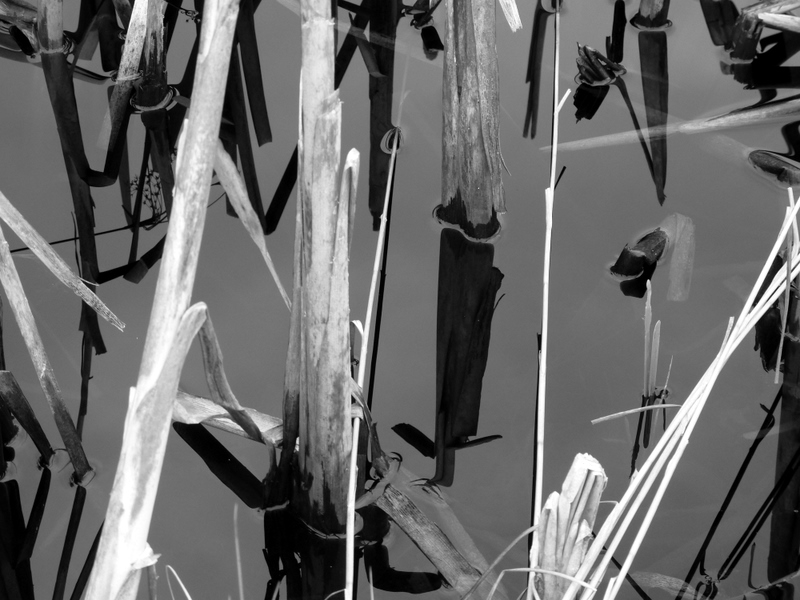
Ice forms among the bulrushes (West Quoddy, NS)


I am forever startled by how quickly night falls as we approach December.  We are in full sunlight and then suddenly we are in darkness; the icy surface of the pond and the sea hold the light a little longer, but then they too must give it up. First the land goes dark, and then the islands; finally the water joins them, an inky pool, noisesome in the darkness.

I sit by the fire with the cat. She has taken up her odalisque pose on the bench beside me, both of us craving the warmth, letting it radiate into our bones. A high of zero degrees today; when Marike and I stepped into the light for a walk, it felt as if the north wind was squeezing my face, pinching my cheeks, thumping my forehead. It took several minutes to get used to it, to stop feeling as if I ought to turn around and huddle indoors. Underfoot, the crackle and shatter of puddles become brittle ice--all of the water of the last days' soakings transformed into glittering patterns in the ditches.

We finally remembered to shut the windows in the bedroom and the bath--I had to climb on the garage roof and then the oil tank and push while Marike ground the windows inward and locked them down; they are secured now for the winter. We dumped three buckets of ashes over the wall, and hung out and then brought in an icy load of laundry. In the interim, we walked around the headland, down to the water, then back again.

Today the chickadees were puffed up and greedy for seeds--one bird, the smallest one, sat repeatedly in my palm and crammed as many sunflower seeds as it could into its beak, perhaps four or five, before flying away to cache them in the trees. We startled a grouse or two, and one or two rabbits, their fawn colouring giving way to snow now--just this week white patches have begun to spread across their noses and up the backs of their legs.

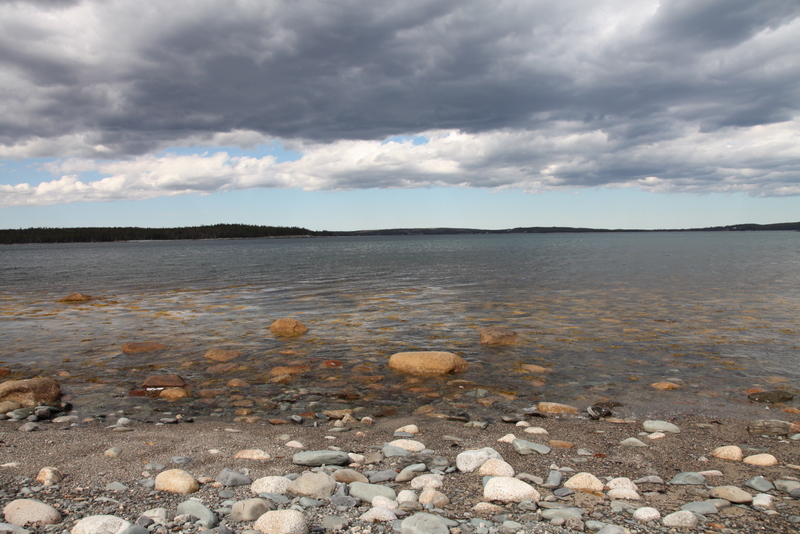
Once I was out in the sun, despite the cold, I didn't want to come in. It was high tide when we set out, the beach underwater, so we picked our way along mossy deer paths in the forest to get from one cove to the next. Once in the lee of the wind, we stopped to sit with the sun on our faces, eyes closed, listening to the suck and drift of the water, to the almost silent fanning of the weeds at our feet.

Just here, like this, I said to Marike, and you can imagine that life on earth is truly good.

Saturday, March 22, 2014

Wednesday, December 18, 2013

Sea Smoke


Just before dawn every autumn, or early in the winter, as the temperature of the air drops well below the temperature of the sea,  the rising sun pulls moisture from the water into the sky. The fog billows up like smoke and runs eastward, towards the sun.  If there is a bit of a breeze, it can look as if the water is boiling, though of course, it is not; it is cooling down.

Early in the morning last Friday, when the thermometer dropped to around -20C, the sea smoke began to form giant clouds over the off-lying islands. Here's how it looked from our house--or, more precisely, from the porch:

And looking back into the house:
 

Sea smoke is also called "artic steam fog." Brr! Nothing steamy about it. For us it means that soon the sea will freeze.

Thursday, November 28, 2013

Tomorrow there will be ice


After an autumn of flat seas, the storm arrives at night. 
Rain stutters against the windows, billows in blowsy curtains 
past the light at the dock. At first the wind sings, a long slow whistle from
afar; it fingers through the cracks in the sash and
moans at the door. A light wind. By midnight 
it's roaring up like a train, slamming not again!
into the south wall. The house beams crack and 
whinge; we put out towels to sop up the water streaming
in: oh please move the pears; it does them no good
to be so damp.


Who sleeps in the midst of so much noise, and yet we do,
waking to ceaseless seas big as houses, water
roiling and tossing, beaches cluttered with 
spindrift and seaspray, the path puddled and filled
by twisted strands of seaweed and splintered 
lobster traps. Scrappy ancient spruces crouch 
close to the earth, turn 
away from the water: stones 
gather at their roots.
The cold hunkers in. We light the furnace;
tomorrow there will be ice.


Tuesday, November 19, 2013

Fall into fall--a month of days


Sunday, Quoddy
It is another warm, sunny brilliant day. Clouds rush westward overhead, a northerly wind rifles the blue water of the bay, and the drying grasses on the nearby hills glow golden in the sunlight. The air is clear, each colour sharp; every needle of the pines is distinct against the sky.


Wednesday, Halifax
Leaves and flowers gather in the bottom of my teacup; outside, the rain falls, scattering yellow leaves on the street.


Thursday, Halifax to Quoddy
With the rain comes a sudden surge of warmth and then fog, clouds of the thick white stuff blanket the highway as we head east.  The trees along the road glow in the dim light: red, orange, yellow, deep piney green. The ribbon of asphalt disappears into the mist. I take pleasure in the colours in even this narrow horizon, the succession of spaces--houses darkened in the rain, the glimmer of a lake, a strip of tidewater meandering through the marsh grass, a sudden flare of yellow and orange as we pass a small stand of maples.


Friday, Quoddy
The sky a bruised blue above a silvergrey sea, the air warm and damp. It could go on like this all day, or any minute now, pour rain.


Saturday, Quoddy
The moon rises, yellow globe above a still sea gone to black. Soon the moon will drop behind the clouds on the horizon, and both lights, the one in the water and the one in the sky, will wink out.

Rain tomorrow, but today, yellow leaves, red fruits on the ash, clothing flapping on the line, northwest wind rifling the blue sea. Scent of woodsmoke as we walk up the road.


Saturday, Quoddy
Today sun, a northwest wind, cool air. Suddenly it is profound autumn. This week I've exchanged blankets for eiderdowns, added an undershirt when I dress in the mornings, dug out the wool socks and gloves and scarves.  In the mornings, headed to school, I passed small groups huddled in winter coats at the bus stop.


Sunday, Quoddy
I stare out at the clouds and grey sea and remember the sensation of waking in the night to hear the wind and the rain pelt the house, the sudden snap of lightening, the distant rumble of thunder in the darkness.


Thursday, Quoddy
A hard frost last night, temperatures below 0; a white rime still lines the wall along the drive and the puddles are frozen over. Ice at the back of the ponds, frost on roof and grass and fallen leaves. It melts and drips from the studio eaves, from the needles of the Mugo pines, turns the porch slick. My fingers are cold.

The apples have fallen from the trees, deer droppings lie all about and moles and voles have dug little hole throughout the yard. Ash berries glow red against the sky; leaves still cling to a handful to trees--the oaks, the sycamore, the hedge maple.


Saturday, Halifax
It is a cool grey November morning--bare branches form a chaotic lacework against the sky, clusters of yellow leaves flutter in the wind, sodden flattened cardboard litters the alley, and condensation forms on the storm windows. This week we had to put the heat on; the furnace rattles in this little house and heat whooshes through the ducts. Those few people in the streets huddle into their jackets. The cold damp seeps into my bones, aches.


Wednesday, Halifax
Snow yesterday. Not much, but just enough in the early evening to cling to rooftops and car windows when I emerged from my office, where I'd been sequestered all afternoon, oblivious. now a cold morning, the sky clearing, condensation blocking out the view. I turn up the heat and start to boil water for tea, but then climb back into bed under the covers to wait for the room to warm.


Thursday, April 18, 2013

Pond scum wakes up


I did not expect sun today, nor 
the greening of the grass.  First heat. 
Wet dog.
We shed our coats along the path,
toss sticks in every ditch and pond,
turn inland. Hear silly frog songs:
stuck
broke
wet
cold
pond scum
wakes up           look  out
nude 
girl

Notes
The photo is of our pond, where the frogs are not yet singing; the air is still cool so close to the sea.

When we stopped to listen to the first frogs emerging from the black pools alongside the road, Marike asked me if I thought I could write a poem that would mimic their sounds.  I imagine the frogs as ironic, laconic monosyllabic voices. Aural graffiti.

A shout out to poet Brian Bartlett, who reminds me that Thoreau writes about the language of the frogs in the "Sounds" chapter of Walden. Conveniently, the whole is online. I see as soon as I read it, that I've heard (or imagined) the frogs in an earlier state of debauchery; they are still testing their cups, not yet bragging into them.

Thoreau then:   "In the mean-while all the shore rang with the trump of bullfrogs, the sturdy spirits of ancient wine-bibbers and wassailers, still unrepentant, trying to sing a catch in their Stygian lake — if the Walden nymphs will pardon the comparison, for though there are almost no weeds, there are frogs there — who would fain keep up the hilarious rules of their old festal tables, though their voices have waxed hoarse and solemnly grave, mocking at mirth, and the wine has lost its flavor, and become only liquor to distend their paunches, and sweet intoxication never comes to drown the memory of the past, but mere saturation and waterloggedness and distention. The most aldermanic, with his chin upon a heart-leaf, which serves for a napkin to his drooling chaps, under this northern shore quaffs a deep draught of the once scorned water, and passes round the cup with the ejaculation tr-r-r-oonk, tr-r-r — oonk, tr-r-r-oonk! and straightway comes over the water from some distant cove the same password repeated, where the next in seniority and girth has gulped down to his mark; and when this observance has made the circuit of the shores, then ejaculates the master of ceremonies, with satisfaction, tr-r-r-oonk! and each in his turn repeats the same down to the least distended, leakiest, and flabbiest paunched, that there be no mistake; and then the howl goes round again and again, until the sun disperses the morning mist, and only the patriarch is not under the pond, but vainly bellowing troonk from time to time, and pausing for a reply." http://thoreau.eserver.org/walden04.html

Tuesday, April 16, 2013

Blue odour of iodine


Strange and complicated morning. A skim of ice
calms the sea; sudden colour scours your eyes.
Bright light white heat flood the house. 
Throw open the windows! Fling wide the door!
Flash of kingfisher wing and peaked blue crest
(you're back! we're so glad to see you!). Sparrows sing.


Scent of---    open water. Salt, of course. Blue
odour of iodine, knotted rotting bladderwrack,
sunwarmed grey stone steeped in cold mud:
each element bound to its proximate. Life
on the strand, lived at an edge, wind-tumbled,
cloud-driven. Unstable. Chance-riven.
What peculiar mercy makes us forget that
with heat, comes fog?


Notes
I am thinking of Boston this morning, and the two explosions at the marathon finish line yesterday. (Who in North America isn't riveted and horrified by such wreckage of runners and their families and friends?) But to write a poem about that seems impossible.  I judged a poetry competition once not long after 9/11, and the poems that commemorated that event were, without exception, awful. Mawkish versions of catastrophe miniaturized in dancing rhyme. An occasion for falling flat on your face, poetically speaking.  Still, as I finished this poem I realized something about yesterday's news was working me--that what one finds at the edge of a sudden change is not a clash of civilisations (that appalling phrase and idea authored by Samuel Huntington), but one thing slowly shifting into another, "each element bound to its proximate." And this too, of course: what draws us--heat, say, or celebratory events full of oblivious affluence, also draws other things we think we love far less, like fog--or anger and targeted destruction. We forget at our own peril our own angers, our own targets, how closely interleaved rage and righteousness are.

Pictures, more land-weaves and tumbling structures, natural and not, taken on Nova Scotia's Eastern Shore.


Monday, April 15, 2013

Winter galls us


Who can bear how winter clings and stops us at the root?
Nothing in the house to burn save paper scraps and torn up box.
Colour is something memory finds, a gap, an aching loss,
for a world awash in weeviling greys and stinging damp:
mould's heaven, not ours.
We long for sun or a meteor shower,
for a sudden pressing bud, or
the arcs and angles of a swallow's flight.


Who could be content with last year's apples,
or the bitter dregs of yesterday's tea?
Leftover news in a fog-darkened sky.
Like business-as-usual, relentless winter galls us, excoriates hope.
Why live without promises of ripeness, without
a burst of juice between your teeth?


Notes
The echo here is Chaucer of course, the Prologue to the Canterbury Tales.
When will "that Aprille, with hise shoures soote,/ the droghte of March hath perced to the roote"?

Photos were taken in West Quoddy in April 2010.

Friday, April 12, 2013

Nothing lasts


12 April 2013

Bare branches sweep the sky
sunlight scatters shadow
the radio speaks of snow


Yellow coltsfoot splits a stone
blasted wood slivers, rots
nothing stays, nothing lasts


not 
this cold, not 
this wind, not
that streak of cloud.   


Notes

Photos were taken in Beaver Harbour and Port Dufferin today, before the clouds moved in. The overnight forecast is for 15 centimeters of snow.


Wednesday, April 10, 2013

Why is poetry an emergency?


10 April 2013

prose is a house
poetry a man in flames running quite fast through it

Anne Carson, Red Doc>

Why is poetry an emergency?
Why are some poems impossibly slow?


Imagine you are looking out to sea.
Every day for a year.


Some days the water rages. Other days
it chatters. Scatters. Freezes. Whispers.


Rarely is it silent. One vast silver mirror
dumping back a blanked-out sky.


Try a morning when the dog barks you up:
hungry geese are on the lawn.

  
Unmoored ice shards and founders, 
every grassblade dead and yellow.


How long must we
wait for the season to shift?


Slow spring, the kid 
at the filling station says. While gas guzzles 


snow gathers on the windscreen. 
You speed off, late for dinner.


Why is poetry an emergency?
Our hearts knock 


against a stubborn world. Inside,  
forever, the house is on fire.  


Notes
Pictures were taken on the West Quoddy dock. 
Nets and buoys are for fishing herring.  Commercial vessels and pleasure craft in Canada longer than 12 meters are required to carry two or more fire buckets.

Monday, April 8, 2013

Spring is the slowest season


8 April 2013

Nights I listen
for the peepers. They have
not wakened yet.


But sparrows sing and
robins peck at hardened earth
rime of ice on stone.


Cold wind, colder sea:
spring is the slowest season.
Thick clouds disgorge rain.    


Notes
Photographs were taken at Taylors Head Park, on Psyche Beach. They are part of a series I am calling "Landweaves"--found knittings of various sorts.  For more images of this sort, see http://pinterest.com/karincope/landweaves/